Fiordalisi Collection, Naples.
Naples, Museo Archeologico Nazionale, Le Porcellane dei Borbone di Napoli: Capodimonte e Real Fabbrica Ferdinandea 1743-1806, 19 December 1986 - 30 April 1987.
A. de Eisner Eisenhof, Le Porcellane di Capodimonte, Milan 1925, pl. XX;
A. Caròla-Perrotti, Le Porcellane dei Borbone di Napoli: Capodimonte e Real Fabbrica Ferdinandea, 1743 - 1806, Naples 1986, no. 120, colour pl., XXXVIII (and front cover).
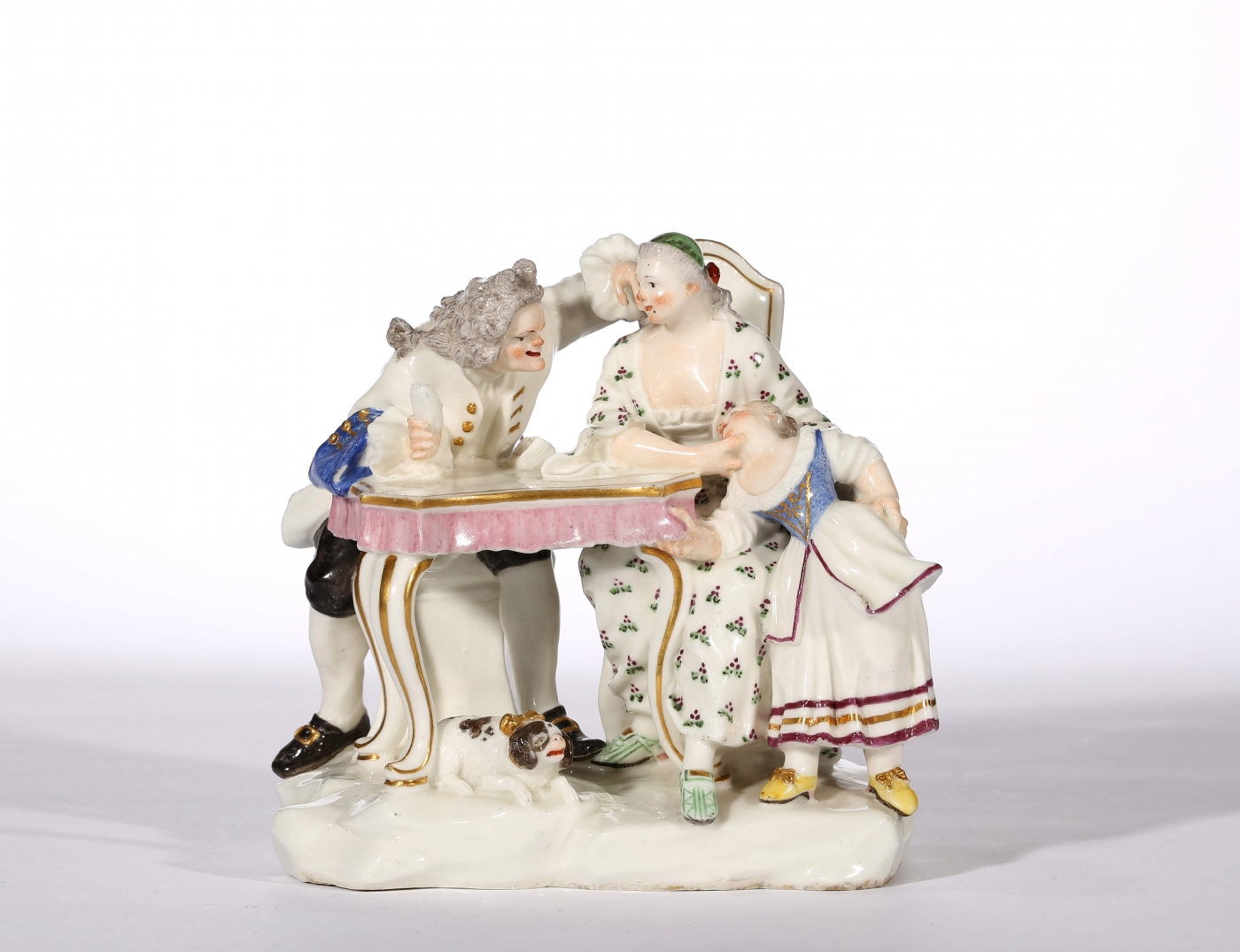
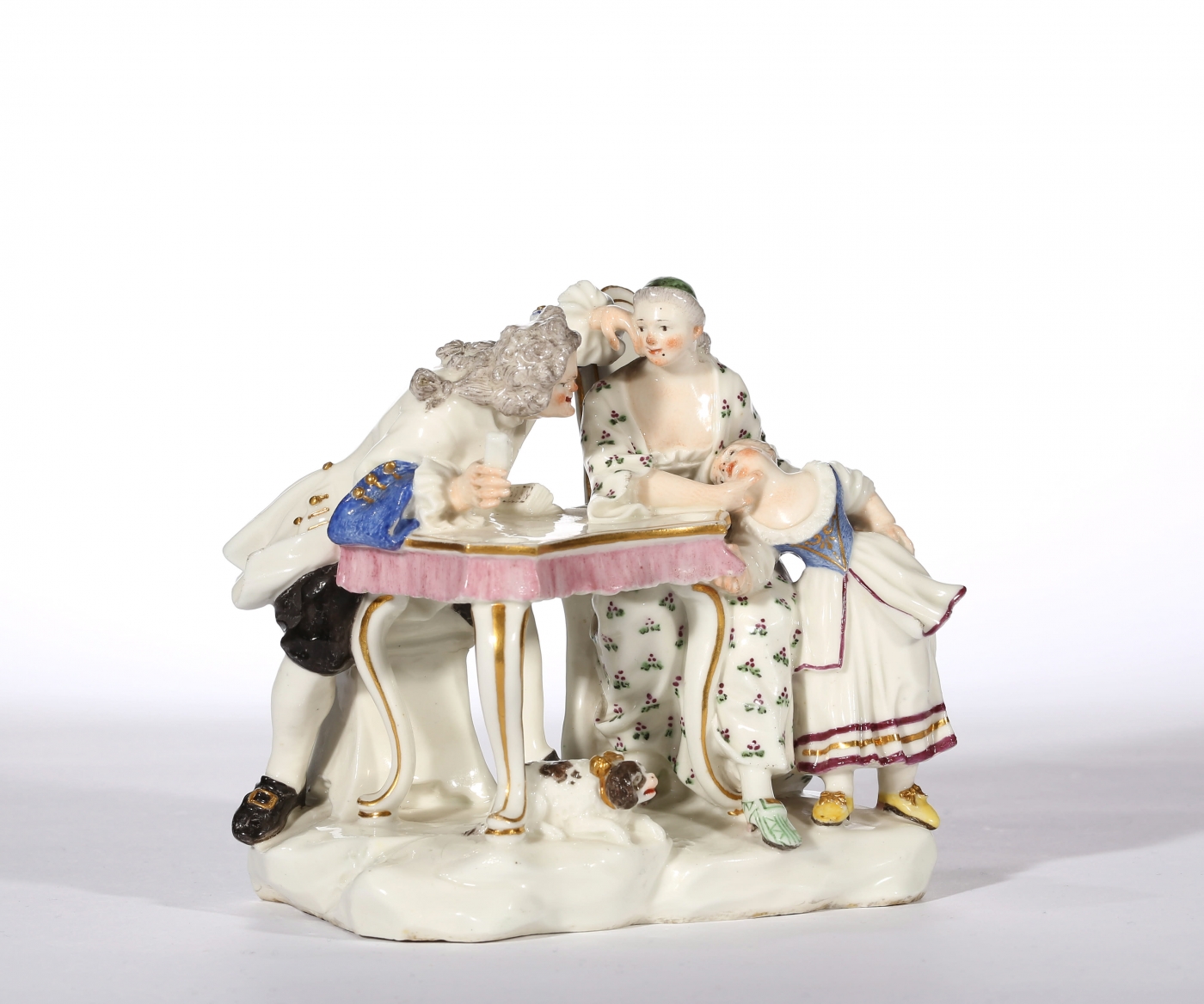
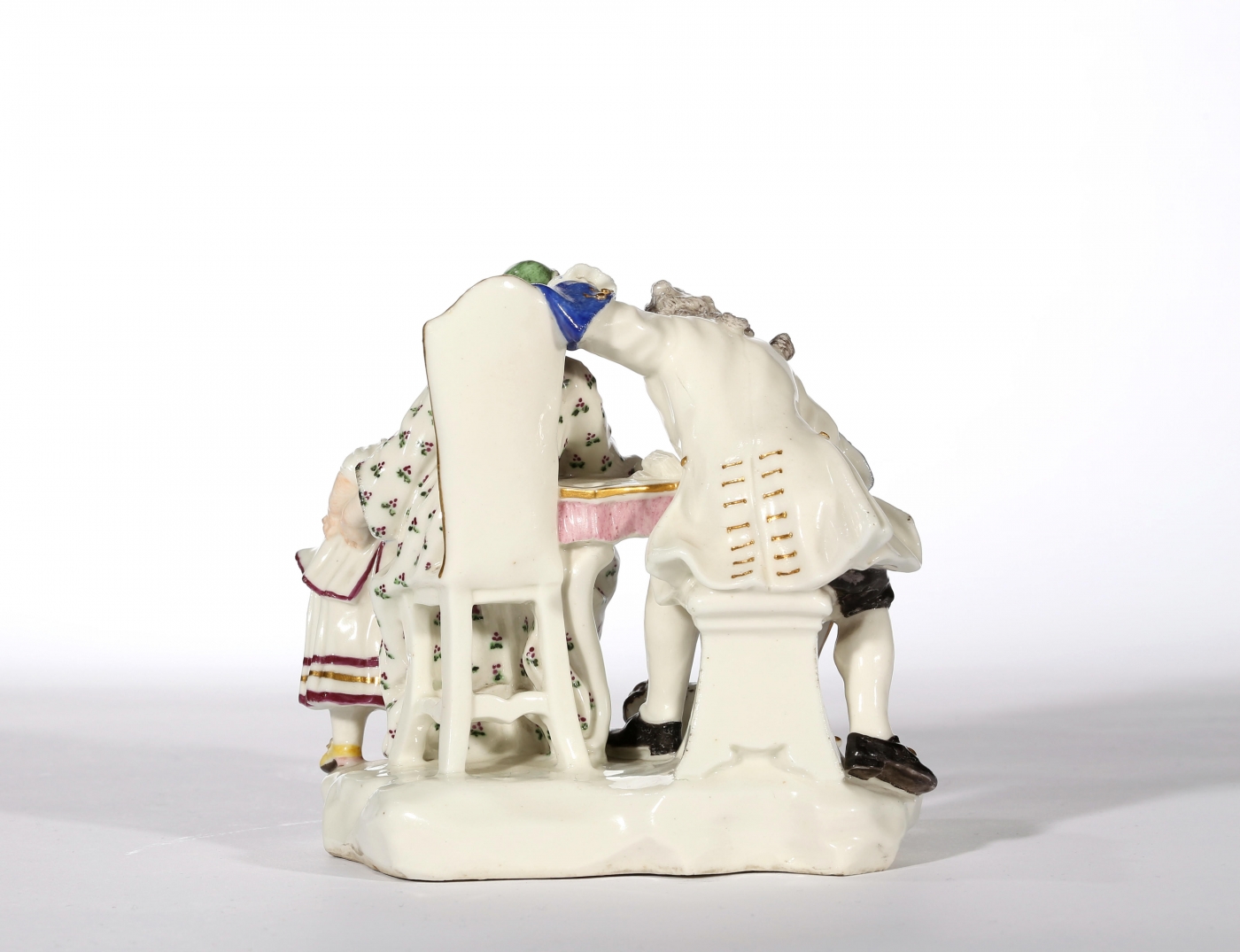
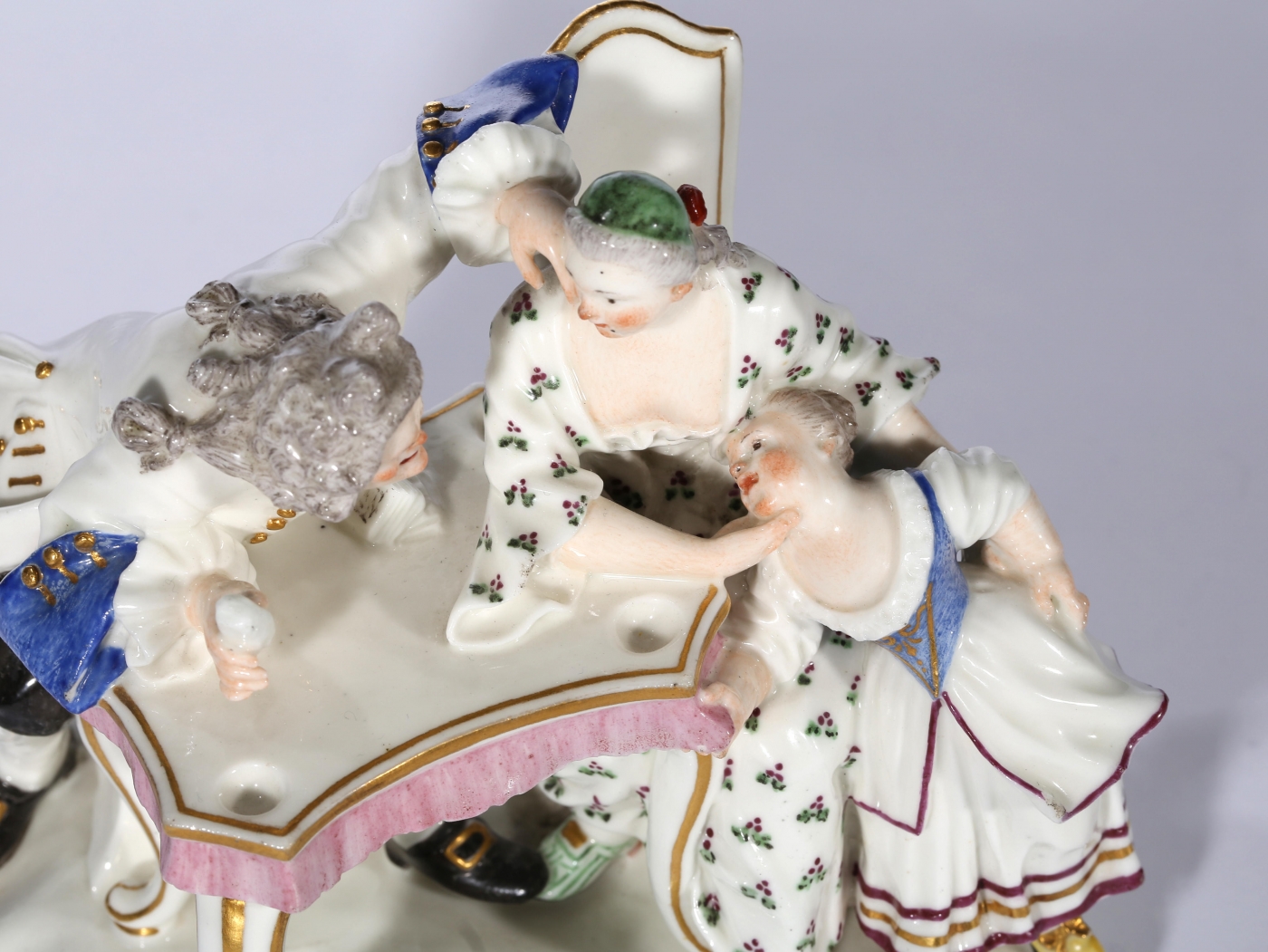
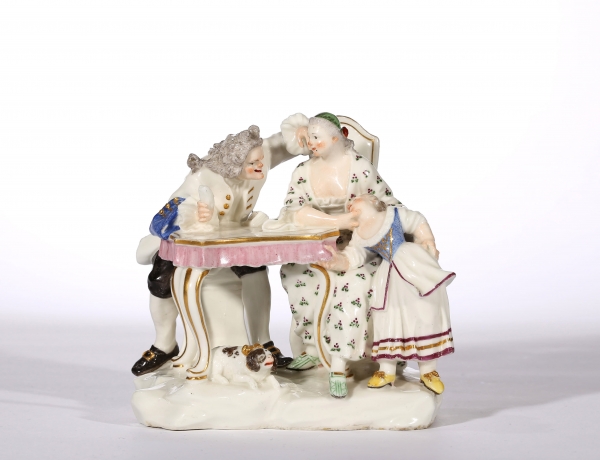
This is a warning against the sins of gambling. The older man and young lady are seated around a card table with her child to one side. The man has placed his left foot over the foot of the elegantly dressed lady, perhaps a symbol of his power over her. Under his arm is a pile of small rectangular playing cards. In his right hand he holds money or IOUs. The lady’s dog trembles with justifiable concern.
Gambling was a popular pass-time for women of the higher social class throughout Italy. The first gambling house was opened in Venice in 1638 and was sanctioned by the government in order to control gambling activity. The dangers of gambling were a common theme of prints which circulated Europe at the middle of the 18th century.
Giuseppe Gricci trained in Florence before moving to Naples in 1738 where he became Scultore del Re to the Bourbon King of Naples Charles VII (later Carlo III of Spain). He was appointed the chief modeller at the Royal Manufactory of Capodimonte. Coming from the more formal North Gricci, he was enchanted by the relaxed life of society in Naples and became a sharp observer of its ways with an ironic and subversive touch.
The only other recorded example of this model is in the Metropolitan Museum of Art, a Gift of Irwin Untermyer, 1964, accession Number: 64.101.346.